For those of you who may be looking for information on relatives who fought in the defense of the Philippines in WW2, try looking at my photobucket page at http://s972.photobucket.com/user/BataanSon/library/?sort=2&start=all&page=1
If you are not already a member of the Facebook group Battle of Bataan, give it a shot at
https://www.facebook.com/groups/bataanbattle/. There are many researchers there who may possibly help you with your questions.
If your relative was a prisoner of war and in the Army of the United States, you may find him in my Bilibid transfer roster located here> http://www.west-point.org/family/japanese-pow/HudsonFast/BTR-Intro.htm
Any other questions...you may reach me at callmebobplease@yahoo.com
I reside in Limay, Bataan in the Philippines. If you are planning a trip to the Philippines and are in need of a guide, I do so for small groups only.
Sunday, March 15, 2015


Thursday, November 22, 2012
 |
| My sister Angela / Leonida |
 |
| My father Early 1947 |
A story that began in Manila seventy one years ago, ended two weeks ago in Limay, Bataan.
My father, an American, soldier stationed in Intramurros Manila since 1936 was happily ensconced in his duty and with his life. His Filipino fiancée and he had a daughter while they were waiting for permission from the U.S. Army to be married.
On December 8, 1941 that all ended when the Japanese
attacked the Philippines. My father, Tech. Sgt Richard C. Hudson who worked at
the Quartermaster Depot, Post of Manila was suddenly shipped to Corregidor and
then Lamao Bataan, never having a chance to say farewell to his fiancée and
daughter. He would never see his fiancée again.
After the bitter fighting on Bataan, he suffered the Bataan
Death March, three weeks in Camp O’Donnell, a hellish Road Work Detail in an
area known as Tayabas and then two years in Cabanatuan. He was eventually
shipped to Japan on a Hellship on July 17, 1944 and became a slave laborer in a
Japanese coal mine very near Nagasaki.
In 1945 when the war ended, he was taken to Madigan General
Hospital in the U.S. and spent six months recovering from the various diseases
and vitamin deficiencies and the effects of long term starvation. All he could
think of since the war began was how his fiancée and daughter were. In April of
1946 he was able to return to Manila and look for his family. He went to his fiancée’s
family home and they told him that shortly after the war began she was raped
and murdered by the Japanese. They had no means to care for his daughter and
they had taken her to the Hospicio de San Jose orphanage and dropped her off
knowing that they would care for her.
My father went to the orphanage and with their help,
discovered who had adopted his daughter. It was a Filipino doctor by the name
of Augusto Cortes who worked at the San Juan De Dios Hospital and his American
wife, Blanche Brinker. He contacted them and informed them who he was and why
he was there. They met right away and spoke about his daughter who he had named
Angela. Her adoptive parents had renamed after adoption to Leonida. The doctor
and his wife were frightened and begged my father not to take her. By this
time, his daughter was almost six years old. My father could tell that the
doctor and his wife loved Angela and provided a good home for her. He did not
have the heart to take her from the only family she had ever known. He asked to
see her and was introduced to her as Uncle Richard. When he left the home of
the doctor that day, he left with a photo of Angela (Above) and was never to
see her again. He also had the promise from the doctor that he would send
letters and photos about Angelas life which he received until 1960 when
communication was lost and he never heard from them again.
My father, for the remainder of his life had that photo of
his six year old daughter in a frame on a nightstand next to his bed until he
died in 1988. A day or two before he died, he asked me to find my sister and I
promised I would although I had no idea how to even begin. With the advent of
the internet in the 1990’s, I began some searching but got absolutely nowhere.
In 2004, a friend in Manila named James Litton hired an
investigator and he was able to discover some information which at first I
believed to be true but some eventually proved to be false. I knew for sure
that Angelas adoptive parents had died but had no idea what happened to Angela.
In 2007, I began this blog of the war in the Philippines which became somewhat
popular. In it I posted the story and photo of my sister. It is further down in
this blog. The photo was the one that sat next to my fathers bed for 42 years.
I had been heavily involved with POW groups and took a tour of the Philippines
in November of 2011 with Edna Binkowski. I met Ednas sister Rosalie at Ednas
home and we fell in love. I retired in January of this year and moved to Bataan
to continue my research and hopefully find my sister.
Two weeks ago, I received an email from a man who read my
blog and recognized the photo of my sister. He recognized it because he had an
oil painting of that same photo hanging on his living room wall that had been
painted many years ago by doctor Augusto Cortes, my sisters adoptive father. He
was shocked. His mother had always told him that she was adopted, but was an
only child. She never knew who her real father was and that she had a brother.
His mother (my sister) had been married twice, both to Filipinos. She had four
children with her first husband, three girls and a boy and two children with
her second husband, two boys of which he Charlie) was the youngest.
What he said next brought me to tears. My sister died of
cancer in 1999 and is buried in Loyola Memorial Park in Paranaque. Thus ended a
24 year search for my sister. Never to hear her voice or embrace her. I have
honored my father’s wish but am so very saddened that he never knew he had six
grandchildren on top of the three I gave him.
On December 16th, I will meet my two nephews from
Manila and possibly one niece from my sister’s first marriage who is coming in
from Singapore. We will meet at the Loyola Memorial Park and I wish to place
some flowers on my sisters grave and get as close to her as I ever will. I know
it will be extremely emotional for me. I now have three nephews and three
nieces to add to my family tree. It was not a fruitless search, for my sister
bore fruit and I will find joy in their company now.
Monday, March 05, 2012
I am happy my father became a slave laborer.
Dear Friends,
For years there has been a contingent of ex-pow's and descendants alike who continually push for repatriations and more in depth apologies from the Japanese for their use of slave labor during the conquest of Asia in WWII. Even after all these years of knowing the mindset of the Japanese toward their opponents who surrendered, these people are in fact, asking for the Japanese to apologize for the instrument of their own survival.
Prisoners of war are a burden. They have no value. They are a drain on resources and manpower, however, slave laborers do have value, therefore a need exists to maintain to a certain degree, a semi-healthy population of free labor to replace the losses of manual labor at home. This makes a prisoner of war an asset and a need arises to maintain them. Can anyone argue that the Japanese went through great lengths and suffered heavy losses in their effort to move prisoners of war to Japan and Manchuria for the purpose providing labor for their war effort?
American prisoners of war suffered the loss of around 3840 of their own on Japanese transports from the Philippines. Around 1445 died in pow camps in Japan and Manchuria. This comes to about 5,285 deaths. My argument in this post is to provide an alternative view in this quest for an all encompassing apology that will somehow set everything right that has not occurred in 70 years, 25550 days, or 613,200 hours.
The Japanese have not and will not open their WWII records to American investigators because they can only lose by doing so. They have been steadfast in this stance for 70 years and to believe that this will change is ludicrous.
My father survived the war because he had some value to the Japanese and as the future perpetually takes form as I type this post, his progeny continue to live and breathe because he became a slave laborer and did not remain in the wretched and crowded conditions of pow camp in the Philippines and get caught between American and Japanese forces. In the Philippine camps they were valueless. It is my opinion that the majority of prisoners would have perished in the Philippines and the "Great Raid" would never have occurred.
Robert
For years there has been a contingent of ex-pow's and descendants alike who continually push for repatriations and more in depth apologies from the Japanese for their use of slave labor during the conquest of Asia in WWII. Even after all these years of knowing the mindset of the Japanese toward their opponents who surrendered, these people are in fact, asking for the Japanese to apologize for the instrument of their own survival.
Prisoners of war are a burden. They have no value. They are a drain on resources and manpower, however, slave laborers do have value, therefore a need exists to maintain to a certain degree, a semi-healthy population of free labor to replace the losses of manual labor at home. This makes a prisoner of war an asset and a need arises to maintain them. Can anyone argue that the Japanese went through great lengths and suffered heavy losses in their effort to move prisoners of war to Japan and Manchuria for the purpose providing labor for their war effort?
American prisoners of war suffered the loss of around 3840 of their own on Japanese transports from the Philippines. Around 1445 died in pow camps in Japan and Manchuria. This comes to about 5,285 deaths. My argument in this post is to provide an alternative view in this quest for an all encompassing apology that will somehow set everything right that has not occurred in 70 years, 25550 days, or 613,200 hours.
The Japanese have not and will not open their WWII records to American investigators because they can only lose by doing so. They have been steadfast in this stance for 70 years and to believe that this will change is ludicrous.
My father survived the war because he had some value to the Japanese and as the future perpetually takes form as I type this post, his progeny continue to live and breathe because he became a slave laborer and did not remain in the wretched and crowded conditions of pow camp in the Philippines and get caught between American and Japanese forces. In the Philippine camps they were valueless. It is my opinion that the majority of prisoners would have perished in the Philippines and the "Great Raid" would never have occurred.
Robert
Thursday, January 19, 2012
My Move to Bataan
After years of researching our fathers who fought in the Philippines in WWII from my comfortable surroundings here in California, I am making a permanent move to Limay, Bataan in the Philippines. Limay is a few miles north of Mariveles and the site for Hospital #1 during the battle for Bataan and the site for the main Quartermaster dump for our forces.
I visited the Philippines for the first time in November, 2011. My tour guide was Edna Bautista Binkowski, a resident of Limay, who has in depth knowledge of the history of all the engagements with the enemy and knows the terrain as only a native of Bataan would know. She is the author of a book about an American woman by the name of Claire Phillips who did much to aide our POW's in Cabanatuan and suffered for her deeds at the hands of the Japanese. The book is Titled "Code Name Highpockets". I have the greatest admiration and respect for her abilities and knowledge and can heartily recommend her should you wish to tour the areas of interest in the Philippines.
As for myself, one can only do so much from California. To be living in Bataan is more than a dream come true. I visited in November, 2011 and discovered the mystery which my father tried to imbue in me with his stories when I was a child and teenager. I never understood his attraction to the Philippines until last November. Nothing I can describe to you in this blog will provide you with the epiphany I underwent while there. You must visit, you must engage the culture and the people to understand the draw of the Philippines.
For me it included meeting Edna Binkowski's sister, Rosalie, who I intend to marry, yet I was already hooked before Rosalie came into the picture. I was in the Philippines for two weeks and did not want to leave. It has a powerful effect on anyone who tours there. As of February 6th, 2012, i will be a resident of Limay, Bataan and if you visit, please let me know at roberthudson@alyricman.com . I would be happy to assist you in any way.
Robert
I visited the Philippines for the first time in November, 2011. My tour guide was Edna Bautista Binkowski, a resident of Limay, who has in depth knowledge of the history of all the engagements with the enemy and knows the terrain as only a native of Bataan would know. She is the author of a book about an American woman by the name of Claire Phillips who did much to aide our POW's in Cabanatuan and suffered for her deeds at the hands of the Japanese. The book is Titled "Code Name Highpockets". I have the greatest admiration and respect for her abilities and knowledge and can heartily recommend her should you wish to tour the areas of interest in the Philippines.
As for myself, one can only do so much from California. To be living in Bataan is more than a dream come true. I visited in November, 2011 and discovered the mystery which my father tried to imbue in me with his stories when I was a child and teenager. I never understood his attraction to the Philippines until last November. Nothing I can describe to you in this blog will provide you with the epiphany I underwent while there. You must visit, you must engage the culture and the people to understand the draw of the Philippines.
For me it included meeting Edna Binkowski's sister, Rosalie, who I intend to marry, yet I was already hooked before Rosalie came into the picture. I was in the Philippines for two weeks and did not want to leave. It has a powerful effect on anyone who tours there. As of February 6th, 2012, i will be a resident of Limay, Bataan and if you visit, please let me know at roberthudson@alyricman.com . I would be happy to assist you in any way.
Robert
Saturday, October 29, 2011
Thinking out loud
We humans are a varied lot. We perceive matters differently. Ask any 10 witnesses to an incident what they saw and you will receive 10 different accounts. We also react differently to stimulus. This is not a bad thing. All of us are unique and wired differently. We are the sum of our experiences from birth to the present. No two human experiences are exactly the same, therefore we can only perceive certain similarities in others and ourselves.
When I give thought to military prisoners of the Japanese after the collapse of the Philippines whom I have met, including my father, I find they neatly fit into three categories. First are the the men who do not talk at all, do not attend conventions, nor want anything to do with those that do.They go to the grave taking their demons with them.
The second group are those who reluctantly speak about the horrors they witnessed. Alcohol tends to lubricate their hesitancy and they'll recount some stories which often end in an emotional shutdown. They tend to tell what they consider funny stories which occurred during their saga and relieves their tension somewhat.
The third group are those that have managed in some way to isolate their emotions from their experiences and are the ones who have written books, magazine articles and are willing to share of themselves during panel discussions and question and answer periods afterward. They have educated us about the battle and imprisonment with first hand accounts. This does not mean that these men do not have emotional periods but they are better suited to contain their memories and keep them leashed.
There is a forth group but their numbers are so small that in my opinion, they do not constitute a group. These men vanished early after repatriation for the most part. They could not take flight from their memories. They were engulfed and drowning in the misery of their past. The human ugliness of the enemy and even among their own ranks was too much to bear. Death for them had become so commonplace that life had little meaning other than a prolongation of suffering. These men in various ways ended their existence.
Personally, my father fit into group two. I could not question him about the war unless he was somewhat intoxicated. This was the only time he could speak of the human drama in war. Seeing his comrades explode into pieces of bloody composition, holding a young soldier in his arms and comforting him as he died, watching his friends and buddies slowly die of starvation and disease and to be absolutely helpless to do anything about it. This was his hell and he could tolerate his thoughts for so long even with the alcohol.
When sober and questioned, his only stories were those funny episodes, for example, how he caught the camp commandants dog and he and his buddies killed. cooked and ate it. All the time telling the story with a short stuttering laugh as though trying to choke back sobs.
At the 2010 convention of the American Defenders of Bataan and Corregidor held by the Descendants Group in Reno, Nevada, I asked Ben Steele, a well known pow, to tell me about a funny experience he had as a prisoner. His answer gave me some insight into how bad his experience must have been to consider what he told me was "funny".
He began his funny story as he was descending a ladder in to the Hellship, Canadian Inventor, on Pier 7 in Manila. As he was descending slowly, the pow above him coming down the ladder must have had dysentery and couldn't hold his bowels and let go all over Ben's head and shoulders. Ben said, "you know Bob, I had no cloth or towel or water to wipe the excrement off my head and shoulders. I had to sit in the hold of that ship for hours and wait until it dried and then peeled it off myself". He then chuckled. I found myself crying, knowing that I would never understand the humor in his experience. I would never understand how bad the situation was that he considered this humorous.
I cannot conceive of surviving such a circumstance. These men, no matter what group they fit into, survived an indescribable experience. All the books by and about pow's can never more circle the rim of their experiences. Even these men who sit in small rooms and speak of their ordeals, struggle to find the adjectives, as they have those thousand yard stares on their faces and search the past in their minds eye.
Who are we to kid ourselves that we will ever understand the totality of their encounter with the mindlessness and ugliness of mans destructive nature. We worry too much about an asteroid striking and destroying the Earth and not enough about our nature striking and destroying the Earth. This will be our undoing. We need to keep this in mind and teach our children its lessons.
Robert Hudson 10/29/2011
When I give thought to military prisoners of the Japanese after the collapse of the Philippines whom I have met, including my father, I find they neatly fit into three categories. First are the the men who do not talk at all, do not attend conventions, nor want anything to do with those that do.They go to the grave taking their demons with them.
The second group are those who reluctantly speak about the horrors they witnessed. Alcohol tends to lubricate their hesitancy and they'll recount some stories which often end in an emotional shutdown. They tend to tell what they consider funny stories which occurred during their saga and relieves their tension somewhat.
The third group are those that have managed in some way to isolate their emotions from their experiences and are the ones who have written books, magazine articles and are willing to share of themselves during panel discussions and question and answer periods afterward. They have educated us about the battle and imprisonment with first hand accounts. This does not mean that these men do not have emotional periods but they are better suited to contain their memories and keep them leashed.
There is a forth group but their numbers are so small that in my opinion, they do not constitute a group. These men vanished early after repatriation for the most part. They could not take flight from their memories. They were engulfed and drowning in the misery of their past. The human ugliness of the enemy and even among their own ranks was too much to bear. Death for them had become so commonplace that life had little meaning other than a prolongation of suffering. These men in various ways ended their existence.
Personally, my father fit into group two. I could not question him about the war unless he was somewhat intoxicated. This was the only time he could speak of the human drama in war. Seeing his comrades explode into pieces of bloody composition, holding a young soldier in his arms and comforting him as he died, watching his friends and buddies slowly die of starvation and disease and to be absolutely helpless to do anything about it. This was his hell and he could tolerate his thoughts for so long even with the alcohol.
When sober and questioned, his only stories were those funny episodes, for example, how he caught the camp commandants dog and he and his buddies killed. cooked and ate it. All the time telling the story with a short stuttering laugh as though trying to choke back sobs.
At the 2010 convention of the American Defenders of Bataan and Corregidor held by the Descendants Group in Reno, Nevada, I asked Ben Steele, a well known pow, to tell me about a funny experience he had as a prisoner. His answer gave me some insight into how bad his experience must have been to consider what he told me was "funny".
He began his funny story as he was descending a ladder in to the Hellship, Canadian Inventor, on Pier 7 in Manila. As he was descending slowly, the pow above him coming down the ladder must have had dysentery and couldn't hold his bowels and let go all over Ben's head and shoulders. Ben said, "you know Bob, I had no cloth or towel or water to wipe the excrement off my head and shoulders. I had to sit in the hold of that ship for hours and wait until it dried and then peeled it off myself". He then chuckled. I found myself crying, knowing that I would never understand the humor in his experience. I would never understand how bad the situation was that he considered this humorous.
I cannot conceive of surviving such a circumstance. These men, no matter what group they fit into, survived an indescribable experience. All the books by and about pow's can never more circle the rim of their experiences. Even these men who sit in small rooms and speak of their ordeals, struggle to find the adjectives, as they have those thousand yard stares on their faces and search the past in their minds eye.
Who are we to kid ourselves that we will ever understand the totality of their encounter with the mindlessness and ugliness of mans destructive nature. We worry too much about an asteroid striking and destroying the Earth and not enough about our nature striking and destroying the Earth. This will be our undoing. We need to keep this in mind and teach our children its lessons.
Robert Hudson 10/29/2011
Tuesday, February 01, 2011
Images of General Jonathon Wainwright
 |
| General Jonathon Mayhew Wainwright (Skinny) |
 |
| Wainwright and Truman White house Lawn About the recieve the Medal of Honor |
 |
| Wainwright at a ceremony after Liberation |
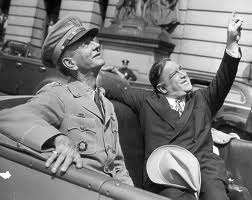 |
| Wainwright and LaGuardia in New York 1945 |
 |
| Wainwright and Chaing Kai Shek in China shortly after Liberation |
Saturday, November 06, 2010
Recent uncovered photos
 |
| MacArthur and Hirohito in 1945 |
.jpg) |
| Hirohito speaking to Japanese Diet |
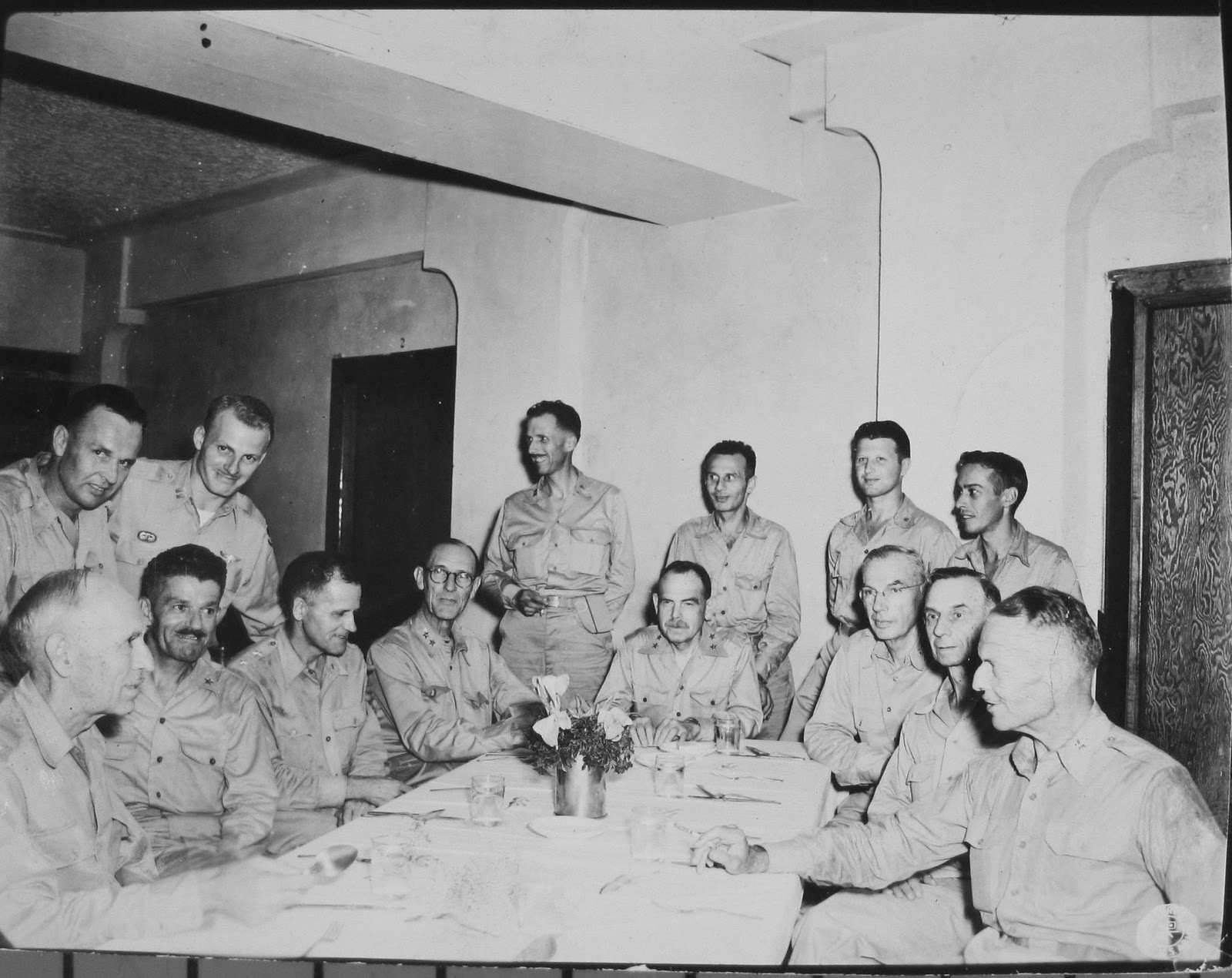 |
| Liberated Generals seated / L to R Generals Lough, Brougher, Jones, Sharp, King, Moore, Bluemel, and Weaver Photo says their first meal after liberation in Manila but most likely taken in Okinawa. |
 |
| Japs attacking Stuart Tank in the Philippines |
Wednesday, August 18, 2010
More Period Photos
 |
| Japanese soldiers occupy Mariveles April, 1942 |
 |
| Japanese soldier eyes American propaganda billboard in Manila |
 |
| 4th Marine Sgt. shows Filipinos how to operate Lewis Machine Gun |
 |
| B24 that made it safely to Australia from the Philippines |
 |
| Boyd (Buzz) Wagner Commander- 17th Pursuit Squadron KIA 12/17/1941 |
Monday, May 31, 2010
Memorial Day Tribute to those fallen and those still rooted to this world / 2010
I have tried on many occasions on this blog to detail the trials of the many thousands of Philippine veterans. I have spilled thousands of words onto this medium in an effort to give a sense to those unfamiliar with the conflict, the human drama endured by our forces.
If there is anything to be learned by you and by me, it is that words can only narrate suffering. Words have not the power to reach or describe the psychological intensity or the horror stained on the retinas of those who witnessed such horrible atrocities, and adjectives do not exist to describe them.
As hard as I have tried, I have learned that only by experiencing what our men endured can one understand the nature of their being, and that will not happen. These men understand each other and as they sit on panels at conventions attempting to convey their experiences to us, they also fail.
These men are in a realm of their own. They can no more describe their ordeal than they can describe Heaven. Poets come close but they miss the mark as well. Battles can be portrayed, suffering can be detailed, torture can be recounted, deaths can be illustrated, fear expressed and the gamut of emotions outlined, but nothing in our existence ties them all together. We become word scientists looking for a unified theory of expression. I am not sure that it will ever happen.
All we are capable of is to listen to these men, honor them, hold them close to our hearts and thank them every chance we have for what they have given us. We have need to thank God for giving us such men when we most needed them and thank them for the freedom to choose our God.
Robert Hudson 5/31/2010
If there is anything to be learned by you and by me, it is that words can only narrate suffering. Words have not the power to reach or describe the psychological intensity or the horror stained on the retinas of those who witnessed such horrible atrocities, and adjectives do not exist to describe them.
As hard as I have tried, I have learned that only by experiencing what our men endured can one understand the nature of their being, and that will not happen. These men understand each other and as they sit on panels at conventions attempting to convey their experiences to us, they also fail.
These men are in a realm of their own. They can no more describe their ordeal than they can describe Heaven. Poets come close but they miss the mark as well. Battles can be portrayed, suffering can be detailed, torture can be recounted, deaths can be illustrated, fear expressed and the gamut of emotions outlined, but nothing in our existence ties them all together. We become word scientists looking for a unified theory of expression. I am not sure that it will ever happen.
All we are capable of is to listen to these men, honor them, hold them close to our hearts and thank them every chance we have for what they have given us. We have need to thank God for giving us such men when we most needed them and thank them for the freedom to choose our God.
Robert Hudson 5/31/2010
Thursday, April 22, 2010
General William E Brougher
At the last ADBC convention in Reno this past April,2010, I donated an autographed copy of General Broughers book of Poetry titled "The Long Dark Road". It was extremely difficult to part with but I am happy that it was auctioned for the price I had asked for. Just a few days ago, a lady who's first name is Morgan posted a comment on this blog. Apparently she was googling her grandfathers name, General William E Brougher, and came across my blog. She was thrilled to see a poem written by him called "Ned King of Bataan". We have been communicating now and she has given me permission to post some family photos of the General. I believe that she was unaware that an organization such as the ADBC existed and that conventions have been ongoing for many years. I have been talking to her about attending next years convention in Pittsburgh and she is very interested. Please enjoy these mostly unpublished photos of the general and his family.
 |
| Brougher prior to his capture 1942 |
 |
| General Brougher, Commander, 11th Division |
 |
| Broughers welcome home party after repatriation |
Thursday, March 18, 2010

YOUNG DEAD SOLDIERS CIRCA 1941 - ARCHIBALD MCLEISH 1892-1982
THE YOUNG NO LONGER SPEAK:
THEY HAVE A SILENCE THAT SPEAKS FOR THEM AT NIGHT.
THEY SAY: WE WERE YOUNG, REMEMBER US.
THEY SAY: WE HAVE DONE WHAT WE COULD, BUT UNTIL IS IS FINISHED, IT IS NOT DONE.
THEY SAY: OUR DEATHS ARE NOT OURS, THEY ARE YOURS; THEY WILL MEAN WHAT YOU MAKE THEM.
THEY SAY: WHETHER OURS LIVES AND OUR DEATHS WERE FOR PEACE AND A NEW HOPE,
WE CANNOT SAY, IT IS YOU WHO MUST SAY THIS.
THEY SAY, WE LEAVE YOU OUR DEATHS.
GIVE THEM THEIR MEANING.
Sunday, January 24, 2010
Recently discovered photos
 |
| Leaflet dropped on Mindanao |
 |
|
Lts. Raymond Sloan and Allen Strauss
from the 17th Pursuit Squadron. Sloan was killed when his area was over run by
the Japanese positions
ion |
 |
| Generals Wainwright and Percival after release |
 | |
|
 |
| P-35's destroyed at Nichols Field |
 |
| Beginning of the Death March |
 |
| Japanese interrogating American POW's on Corregidor |
 |
| Americans captured on Kiska Island |
 |
| Col. Hugh Straughn, an American Guerrilla being interrogated He was later beheaded by the Kempetai at the Chinese Cemetery in Manila 11/1/1943 |
 |
| Japanese Navy Soldier guarding POW's at Wake Island |
 |
| Wainwright surrendering Corregidor |
.jpg)
The fortunate few / MacArthur and Staff back on Corregidor
 |
| At left / Cruel and inhuman propaganda leaflet dropped on Bataan positions in early 1942. Were these measures really necessary? |

Yamashita in Manila after the surrender.


Subscribe to:
Posts (Atom)





.jpg)